Powerful brands are important anchor points for consumers.
Brand loyalty is established early. Successful brands manage to maintain loyalty not only during specific life phases but over their consumers’ entire lifetime.
It’s crucial that brands with long-term success are not merely known by a product or logo. Instead, they need to form convincing, reliable and emotionally attractive “images”, with which consumers can identify and which they can, perhaps, use to distinguish themselves from other people.
In any case a strong brand needs to establish a connection with the consumer that goes beyond the purely rational – such as a certain product performance, or a volatile trend or zeitgeist, so that the brand finds a place in the “heart” of the consumer.
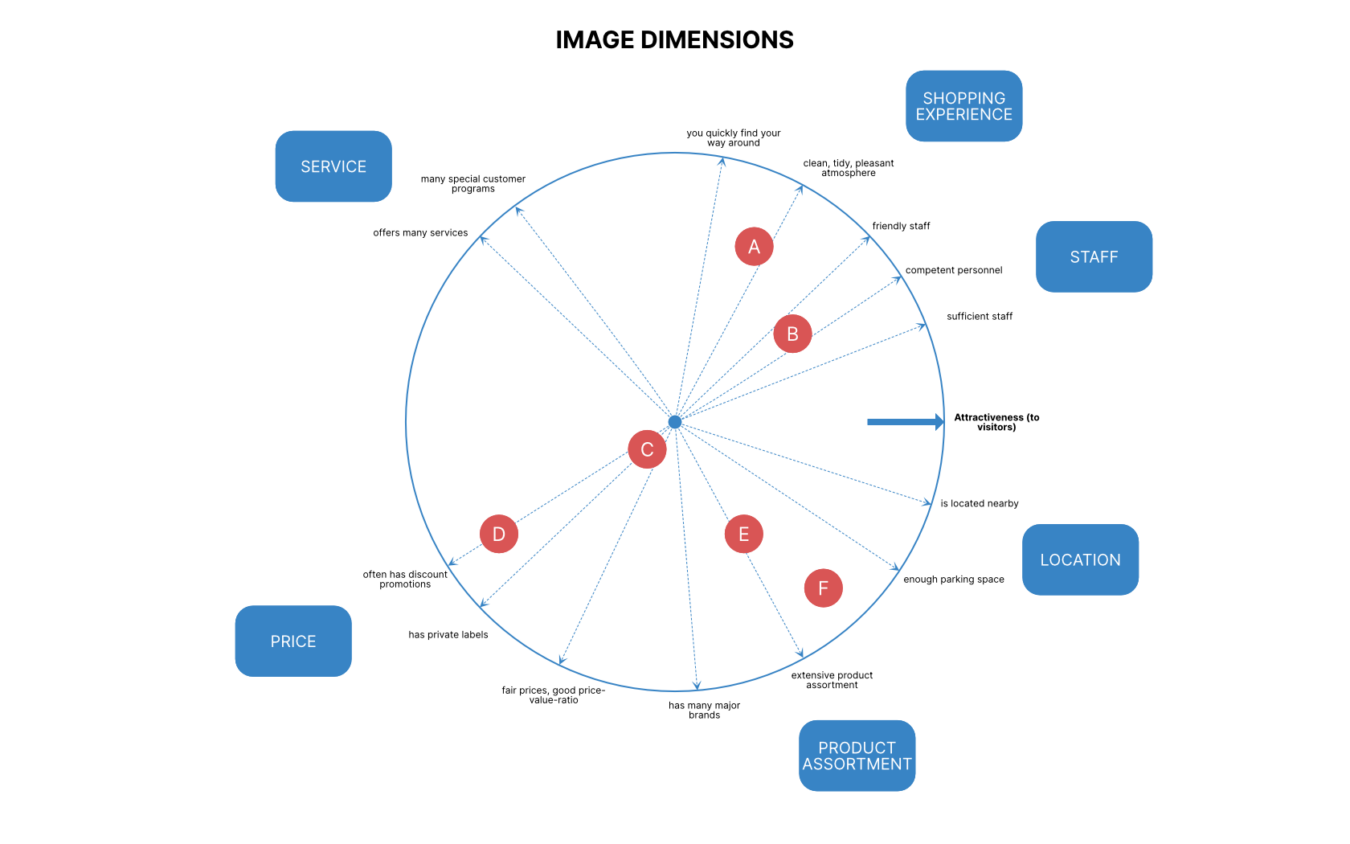
In the eye of the consumer the image of a brand is both the rationally justifiable and the emotionally conveyed atmosphere of the overall picture generated by the brand.
In the context of brand management the first purpose of an image analysis is the identification of the image’s status quo, preferably in relation to the competition. By comparing with competitor images one’s own image is determined in order to find its position in the competitive set and its strengths and weaknesses.